London on a Budget: Don’t Forget This! 

When looking to travel in a big city like London, it’s easy to be seduced into picking the lowest price for hotels/ lodging. We found out the hard way that the cheapest place actually ends up costing more…
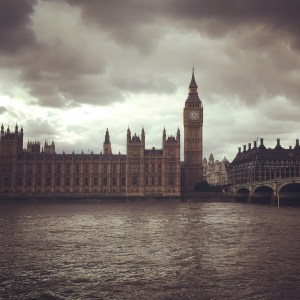
Big Ben.

How? Because time is valuable too. 

Our 100+ day journey (no return ticket!) started with a week in London, so this is sage advice for long journey travelers and ambitious tourists who believe they can absorb London in a week.

It’s hard to find a way around London being pricey: bargain hotels start at $130 USD near the main attractions and hostels are mostly dorm style. AirBnB is typically the best way to get quality lodging at a deeply discounted rate. Unless you’re the worlds greatest hotel rewards points collector of course, in which case, don’t be afraid to share.

After looking into our options, we found a beautiful little place ‘just outside of London City Center’ for a modest $38 per night. That’s just $19 per person, per night. We had a nice little kitchen to cook in and a living room – excellent!

We flew ‘Into London’ (rolls eyes) and began working our way toward the house. Color me surprised to find that it would take us nearly an hour and a half via train and underground to get there.
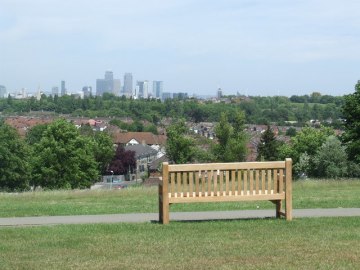
Geograph-2430114-by-Malc-McDonald

Transit into London came at a steep cost of $77 via train on the express, taking about 45 minutes. Buy your ticket in advance and you might not get taken advantage of like we did. After another two transfers, we ended up on the train that would take us 45 minutes outside of London City Center ($4). We then walked / climbed the hill that brought us to the house we would call home for the next week.

Side note: This hill did not mess around. It puts San Francisco to shame. I’ve been on trail hikes less exerting than this. I felt like a winded mountaineer. What’s worse is these delightful little British kids are running all up and down this hill like it’s the easiest thing they’ve done all day. Ah.  Good ol days.

EVERY day we went into London to visit the Tower of London, or Tower Bridge, or the Beefeater Gin Distillery, or to visit a random park to have lunch, we were literally travelling uphill both ways. So that’s what my grandparents meant.


We took the bait for the cheapest place and paid a lot in time; over 18 hours was spent traveling to and from London city center which was $148 in fare over seven days for two people. The underground, overground and Thameslink train are surprisingly inexpensive, but we definitely could have used that 18 hours to spend another day at the Imperial War Museum, the National Gallery or the British Museum. 

Taking into account travel costs, the weighted cost of lodging became $415 – not taking into account our time (which of course everyone values differently). That brought the nightly rate to $59.29 or $29.65 per person.

We may have been able to find something that was more accessible and end up spending the same amount (or less), by opting for something a little higher in initial cost.

Pro-tips:

London’ is broken up into six zones. Zones one and two are where most of the popular attractions are. We were technically staying in London, but zone six, which was an hour away from the center. A trip to the Jewish Museum, a little further afield, was over 90 minutes away and back.

If you are staying at an airbnb (which we totally recommend) please ask them what zone they are in and what station they are near. Give us a shout if you need help deciphering the infamous London Underground map. 🙂

Think about how much time you want to spend getting to your points of interest each day, and always account for potential delays when you are further away. Remember – time is money!

Cheaper accommodation usually sacrifices: Convenience, Amenities, and/or Access to Transit. Even if you do not mind spending more time in transit, always take the everyday travel cost into account when making your decision.
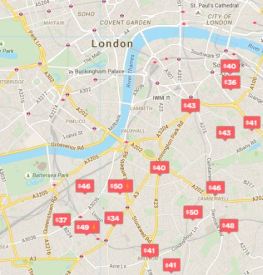
AirBnB London

Consider a slightly more expensive accommodation to save yourself time or money overall. Looking back now, we could have spent $40-50 per night at a different AirBnB and found ourselves at a spot near London City Center, which would have saved us $65-135 – not to mention the time we spent and the stress incurred by the longer transit.


Whether you are on a mission to visit every country in the world as we are, or you’re just looking for a quick getaway to a world city, we hope that the information here might prove enlightening whilst you are planning.

Please send us a note of the travels you wish to embark on, and don’t be afraid to let the travel bug bite.

Mark & Melody
The Oystercard Doesn’t Get You to London Airports, and other London Travel Tips

More about the benefits of an Oystercard and why you should by one in London here, but it’s a little known fact that it doesn’t cover transport all the way to ANY of London’s major tourist airports: Gatwick, Heathrow or Standsted. Instead, each airport offers its own express train. 

For flying into London Gatwick, please note, it’s about two hours from London City Center, so please calculate an additional $70 USD/ £40 for two people for the Gatwick Express to Victoria Station. From there you can buy an Oystercard and get just about anywhere in London via the tube/ underground. 

For flying into London Heathrow, it’s about an hour from London City Center. The Heathrow Express travels to Paddington station in 15 minutes for about $30 / £21 if you purchase in advance. To buy the Express ticket upon arrival into an airport it’s an additional $8 / £5 per ticket. 

For flying into London Stansted, there are two public transport options to get near city center. For $14/ £9, a 55 minute bus ride will take you from the airport to Liverpool Street. For $27/ £18, a 45 minute Stansted Express train will get you from the airport to Liverpool Street. 

NOTE: once you get to Liverpool street, you can use your Oystercard to get anywhere else on the tube, the overground, or the bus system. 

If you’re traveling with a group or you don’t want to deal with inevitable crowds, a third option is a taxi from Stansted which costs between $120-150 (£80-£100), though I’ve never taken it. You’re better off downloading the Gett app and hailing a taxicab that way. 

This is important so I’m saying it twice: buy your Oystercard in London. Do not get a travel card. Do not buy one-way tickets.  And please look hard at the London Pass before subscribing. The Oystercard lets you travel like a Londoner through nearly all the zones and you can refill/ top up the card as you go. 

Happy travels! 

Your Survival Guide to Driving in Scotland

The scenery in Scotland is world class. Traveled to over a dozen countries and it’s truly some of the most majestic landscapes I have ever seen. Scotland deserves independent exploration, some time to get lost in the incredible greenness of the area. After some frustrating, laughable trial and error, we can give you this must know list to make driving in Scotland much easier. 

There are four types of roadway: M, A, B, and C. The M stands for motorway, and that’s your typical highway (ex, M6, M74). A is secondary road, a busy two or four lane road (ex, A735, A82). B and C are curvy, narrow, back country roads.

The speed limit on these roads are in MILES PER HOUR, not kilometers per hour:

M roads: 70 mph

A and B roads: 60, but sometimes required to slow to 40 or 30 mph

C roads: 30 mph

This was discovered when we were going 60kph (37 mph) on a motorway designed for 60mph. No wonder we were getting passed right and left! Speaking on passing…

Odds are if you’re visiting Scotland, you come from a country that drives on the right. Your highways have the slow lane on the right, entrance and exit ramps on the right, and the fast lane on the left, toward the middle of the highway. In the UK, people drive on the left. This means the slow lane is on the left, the entrance and exit ramps are on the left and the fast lane is to your right. If you need to pass someone, you will be moving left to right. 

Love roundabouts. Scotland uses roundabouts instead of stoplights, so your GPS will be prompting you to take exits off roundabouts with about the same frequency you stop at a light in your hometown. Some of them are quite large, while others are the size of an intersection in a suburb community. Enter roundabouts by turning LEFT. 

Signs approaching a dangerous curve or severe dip in the road will tell you to slow down but not tell you what speed to reduce to. Generally reducing speed by 5-10mph will yield a more comfortable turn. But if you’re in a sports car and you want to power slide or attempt to drift,  just maintain and you’ll get a good thrill.

Drive during the day only. In the summer, the sun doesn’t set until 10pm. Many of the A, B and C roads are without street lighting which can be very dangerous. 

Taking a car around Scotland has proven to be taxing on the body and mind, especially with a manual drive car. Nearly all rental cars in the UK are manual: automatic drive is about twice as much. However, the scenery is more than rewarding and more than worth it. 

Safe travels! 

Eating in Oslo is Outrageously Expensive

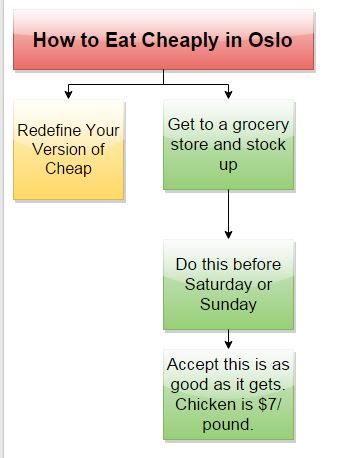
Eating Diagram

Oslo may no longer be the world’s most expensive city (it lost that rank in 2013), but it is still outrageously expensive. Unfortunately, for budget travelers looking to spend $50 USD or less, there is not a lot to do other than walk. Happy hour doesn’t exist here. Eating on the cheap doesn’t exist here. Thankfully the couple we are pet-sitting for left a fridge with some foodstuffs in it because otherwise we would DIE.

At an Irish pub, $120 was spent in Oslo on 2 Guinness, 2 ciders, a chicken club sandwich, Irish stew, and a whiskey.

We thought, no worries (actually Mark was like “WHAT!”), we’ll just eat from convenience stores and gas stations…

At a Shell gas station, $30 was spent on a Coke ($4), water bottle ($4), two Snickers bars, a muffin, and two hot dogs.

We learned that the city pretty much shuts down in July and it is cheaper to spend a month anywhere else in Europe than it is to stay in Oslo. We learned this after we walked around Oslo looking for cheap eats courtesy of Yelp, but two of the places we went to were closed.

We wound up… at a Norwegian version of Chipotle (one of two places open) where two burrito bowls cost $30.

We’ve finally given up on dining out, even as a treat, so we relegated to finding the grocery store. Only to discover…

Grocery stores close at noon on Saturday and are closed on Sunday.

When I said I wanted to lose weight, this is not what I had in mind.

Travel Diary: Battling Sickness in the United Kingdom

You don’t always need to catch a virus or get invaded by bacteria to get sick. Sometimes you try to do so much, so quickly, with such vigor, that your body literally breaks down and forces you to stop.

That’s what happened. After walking about 30 kilometers (18 miles) over 2 days, our bodies said, “Enough.” Naturally, we went on a hunt for some pain relief. In the UK, the equivalent of a CVS/ Rite Aid is Boots. Boots has a bunch of cosmetics as well as a pharmacy and some minor first aid items. We picked up some throat losenges we thought would do the trick.

No dice. Earlier today I went to an establishment that said simply ‘Pharmacy’ on it. I went in and that’s exactly what it was. Two pint-sized aisles of what seemed like space-filling items, and a whole wall after wall of drugs behind a pharmacy counter that a young pharmacy student was manning. After a bit of browsing items that had absolutely nothing to do with my pain, I walked up to this pharmacy student and said simply, “I have sinus pain and a fever. What should I get for that?” He simply nodded and turned to the pharmacist, who scanned the myriad of shelves for an item and handed me some intense looking sinus/ fever reducing SudaFed (4 pounds).

The main purpose of this is to illustrate that you cannot buy any pain relieving/ fever reducing/ cold or cough suppressants without first speaking to a pharmacist. You go up to them, or queue up (wait in a line) to talk to them. No charge. You tell them your ailments, and they fix you.

Note: Please tell your pharmacist what you’re taking or if you’ve had any alcohol or aspirin in the previous 48 hours. They don’t always prompt you for this. Anything, even contraception pills, can have adverse reactions when taken with certain medication.

Our Most Oft Asked Question: Travel – on the Cheap!

One of the questions that we get most often is, “How can you afford to travel? You must be rich / rolling in the dough / get money from your parents.” While all of these things would make traveling long-term much easier…it just isn’t the case for Melody and I.

Knowing that we would need to find a way to do it a little cheaper, and also knowing the type of trip that we both mutually enjoy, we set out to discover some cheaper ways to travel.

In general, the two largest cost items while traveling will be lodging and food – these are inescapable truths. While it is certainly possible to eat ramen noodles and camp in a tent, sometimes the weather and local culture may just not let that be a possibility (not to mention that would likely become old, very quickly). Striking a little bit of the middle ground, the following are a couple of other options:

  1. House-sit!We would first like to say a big thank you to Hecktic Travels for their amazing blogs and advice, as well as informing us and many others about house sitting as a travel option. Cheers, guys!Anyone with pets that loves to travel knows that bringing their animals along can make for…less than ideal trips. Traveling with a pet is expensive, and depending on your breed of dog / cat / bird / other exotic animal, may not be possible at all. For the longer trips, it is also not possible to leave your animals unattended (you wouldn’t do that, right?).

    Boarding your animals is another option – but again expensive.

    Some are lucky that they have close family or friends to watch after their furry / feathered babies – but again, not always possible for longer stays.

    For people who fall outside of these lovely conveniences, consider having someone come sit your house!

    In exchange for lodging, you can have a trusted and verified traveler stay at your house and care for your animals / property. The requirements for the stays are clearly stated (expectations and duration), and there are even some that are paid – though not very many – your mileage may vary.

    For our uses, we used Mind My House and Trusted House Sitters, but there are many others out there. Not only will you get to visit some unique and interesting destinations, but in most cases your only costs will be transit expense, food and some time commitment. A secondary bonus for people like us who live in a place that having animals is forbidden – you even get to enjoy the company of the resident animals.

  2. Help ExchangeMelody and I both enjoy staying active. We also love to meet new people and immerse ourselves in new cultures – out of the city and away from the tourist areas. Don’t get me wrong, we love to see the sights too, but there is something powerful about the countryside and the people that live outside of the hustle and bustle of the city.Keeping these things in mind, we set out to find a way to immerse ourselves into the everyday life of a local – and save some money doing it along the route. When we came across Help Exchanges, we knew we had found a winner.

    For our uses, we use HelpX – although there are many more sites out there that do the same thing.

    Simplified, a help exchange is an exchange of your time and labor for lodging and food.

    This exchange comes in many shapes and sizes, but the postings usually detail exactly what the expectations are in advance. The number of hours you are expected to work will vary, but most that we have seen are between 20-25 hours per week.

    Some examples of what you might expect to find:

    Hostel Operator looking for help in maintaining hostel. 20 hours per week to include: Admitting guests, making beds, dusting lobby, preparing food, general cleaning. In exchange you will receive private lodging with bathroom. Minimum 30 day stay.

    or

    Looking for helpers to work in the garden with some experience of gardening and growing vegetables to get the spring work done. Four hours work per each nights stay in return for 3 meals per day and accommodation. Double en-suite bedroom and single bed. Fresh food from the garden where possible and all home cooked meals prepared for you.

  3. AirBNBIf neither of the above sound overly interesting, or you are not really interested in working for your lodging / food, fear not! There are other options for you.AirBNB is, in effect, a house / room / couch sharing site designed to allow homeowners the opportunity to earn a little extra income on empty or unoccupied rooms within their home. These rooms are usually priced substantially below what you might find at a hotel in the same area.

    For smaller groups 2-3, this might actually be cheaper than if you were to individually stay at a hostel.

    The site itself is very simple to navigate, and rooms are available in 190+ countries.Capture

    With an available mobile application, the ability to instantly book rooms, and read reviews from others who have stayed, Airbnb is a viable option for those planning far in advance, or on the fly.

For our purposes, we will be using a combination of the three, in addition to some other creative maneuvering to create the most memorable and dynamic trip that we can.

We have almost finalized our rough travel itinerary, so keep an eye out for that soon. In the meantime, keep thinking about that trip you would like to take, and… don’t be afraid to let the travel bug bite.

Cheers!

Mark & Melody

Going Airbnb? Check Your Assumptions First

Airbnb is a great tool to find authentic places in the city, in the suburbs, up in trees, down by the ocean, hosted by locals that affords you a more genuine experience. Prices range dramatically across 190 countries, from $10 a bed to several hundred. You can rent out entire villas, mansions, downtown flats, or rent out a single room or even a futon.

DSC_0001

This variation is great. I must advise you, on behalf of those variations, to be aware of some assumptions. Here’s a 5-count list of the things that surprised me at my first AirBnb.

1. The hosts might not be there to greet you, or meet with you period.

One of the things I looked forward to was meeting new people in my new location as soon as possible. I was surprised that the hosts weren’t there and that they wouldn’t be around. It’s not their primary residence. This was one of several places they owned. I assumed the hosts wanted to at least put a face to the person staying in their house. Nope. Apparently not bothered by this at all.

Pro tip: If this will bother you, most listings on Airbnb will note whether the hosts are there to greet you.

I’ll be sure to look for this when booking my next listing.

2. Not the hosts’ fault, but sometimes the neighbors wake up really early. And sometimes the neighbors’ dogs wake up early too.

Ah, the bane of urban living. In Chicago you can hardly sneeze without being on someone else’s property. That being said, the unit below us had a tiny yippy dog that decided to start its yipping rounds about 7am. The dog would yip on and off for a couple of hours, which are precious hours after a long flight on a plane, or at a bar…

3. You may have housemates that you don’t interact with…at all.

Another cool thing I assumed (and was totally wrong about) is that fellow house mates want to hang out with you. We were lucky that the housemates at least greeted us as we walked out. We only saw them once, and never engaged in witticisms over travel and bonded over whiskey. Nope. A quick hello, goodbye and they were off.

4. You may be sharing a house with someone who balls up wet towels in the bathroom or leaves dishes in the sink.

College, 2.0. I don’t know why this bothers me (it’s not a catastrophe in my own house) when I travel, but I was a little peeved by a balled up wet towel in the bathroom. It’s kind of like leaving the cork off of the wine; you know someone else wants to enjoy it, so why leave those good things to spoil? Especially in a place where it’s like 21 degrees outside and everything with water on it suddenly freezes.

Also not a problem in my house, but I hate cups in the sink. Cups are really the most annoying thing to wash. Second only to Tupperware.

5. Not every shower in the universe has water as hot as you like it or pressure as high as you need it. 

Apparently I like my shower water temperature: skin-burning hot. Old buildings simply can’t deliver. Also, I need more than a light poof of water. Who doesn’t like waterfall shower heads? Please comment if you don’t.

Ciao.

xx

3/161: Lover’s Key State Park

I’m pretty sure we’re list freaks.. We find a list of places  and decide to do it. (48 contiguous states? Check. Every country in the world? Wellll, that will take a little longer, but we’ll get there eventually…)  Thinking a little bit closer to home, we decided to go visit every state park in Florida. Good news! There’s 161 of them. 

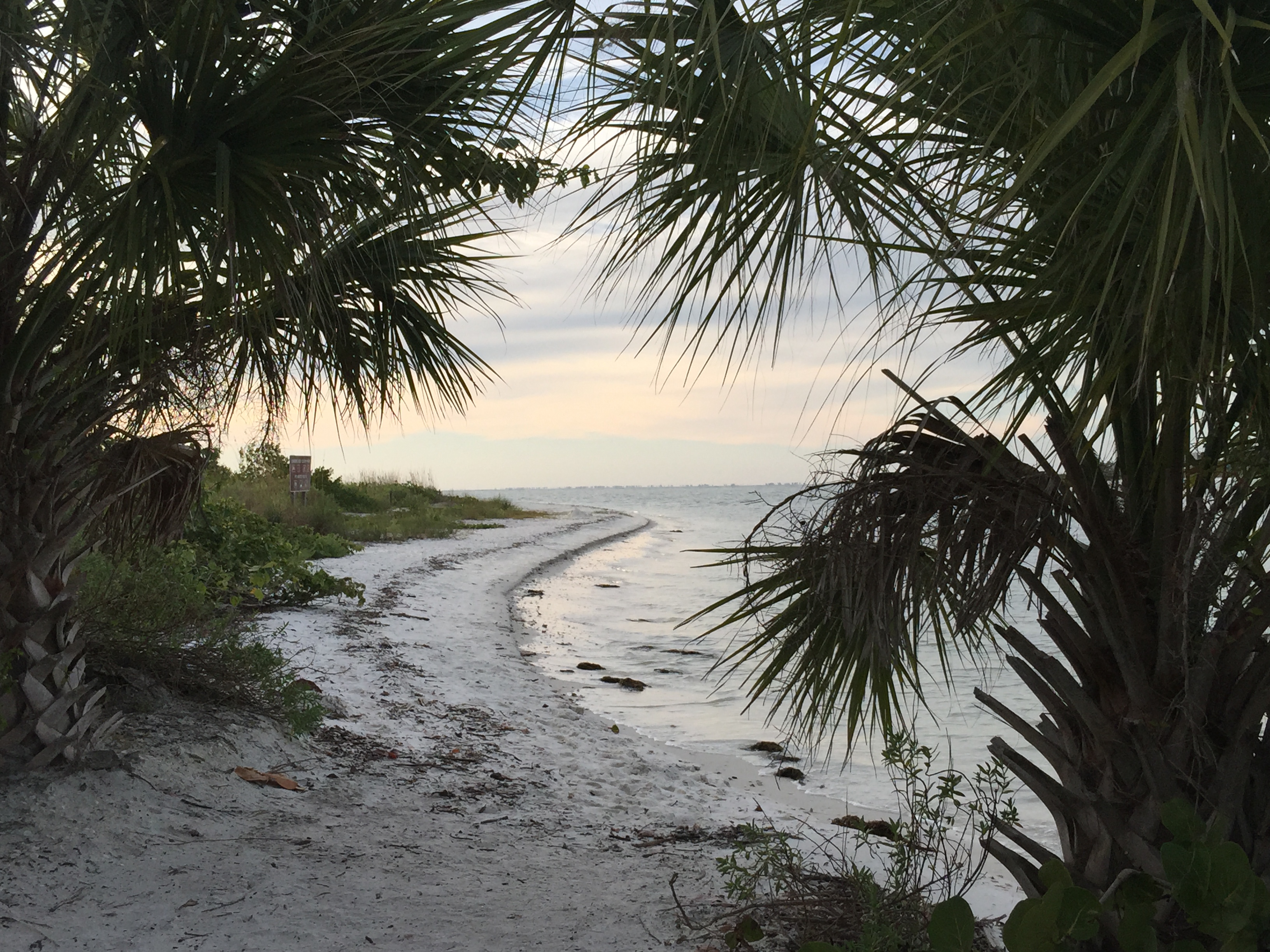
Living in Miami wed never known there’s that much land to make state parks OUT of. Here we are, though, at #3: Lover’s Key State Park. It’s about two hours to drive across the state to Ft. Myers, and it’s well worth a visit. A $2 donation will get you in (honor’s system!). Park your car, no fees, no frills, just a really good beach.

IMG_0670

Let’s describe the sand. Oh, the sand is like baby powder. So gentle and fine and so beautiful you don’t mind it creeping in your shoes or between your toes. Even when it’s hot the sand remains cool. (This is not so on the East Coast, where the sand from the Atlantic Ocean will burn your toes right off!). OK. Enough about the sand. The water. Crystal clear. Even after a storm it’s clear. It’s got this turquoise almost island tint to it. It’s beautiful. Refreshing and clear. You can see every speck of baby powder sand.

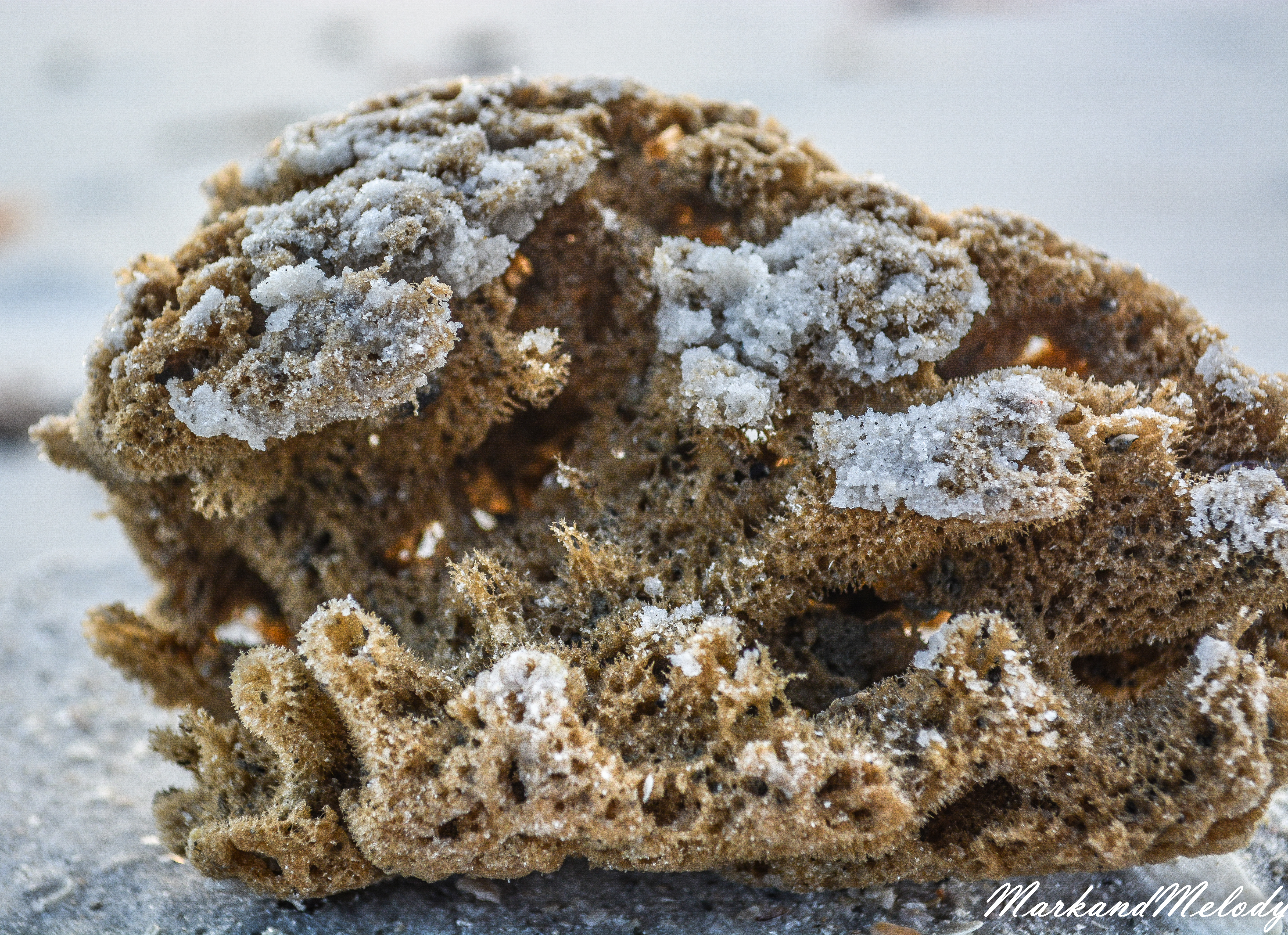
Then there’s the things to look at. Seashells. Sand dollars. Sponges. Real live sponges. Coral. Crabs (not the bad kind, the scurrying across the sand kind). Most importantly, the beautiful lack of people. Though the parking is right off the main road, it really  feels like you have the place to yourself.

Close up of a sponge
Sponges vary from a beige to orange to a bright red
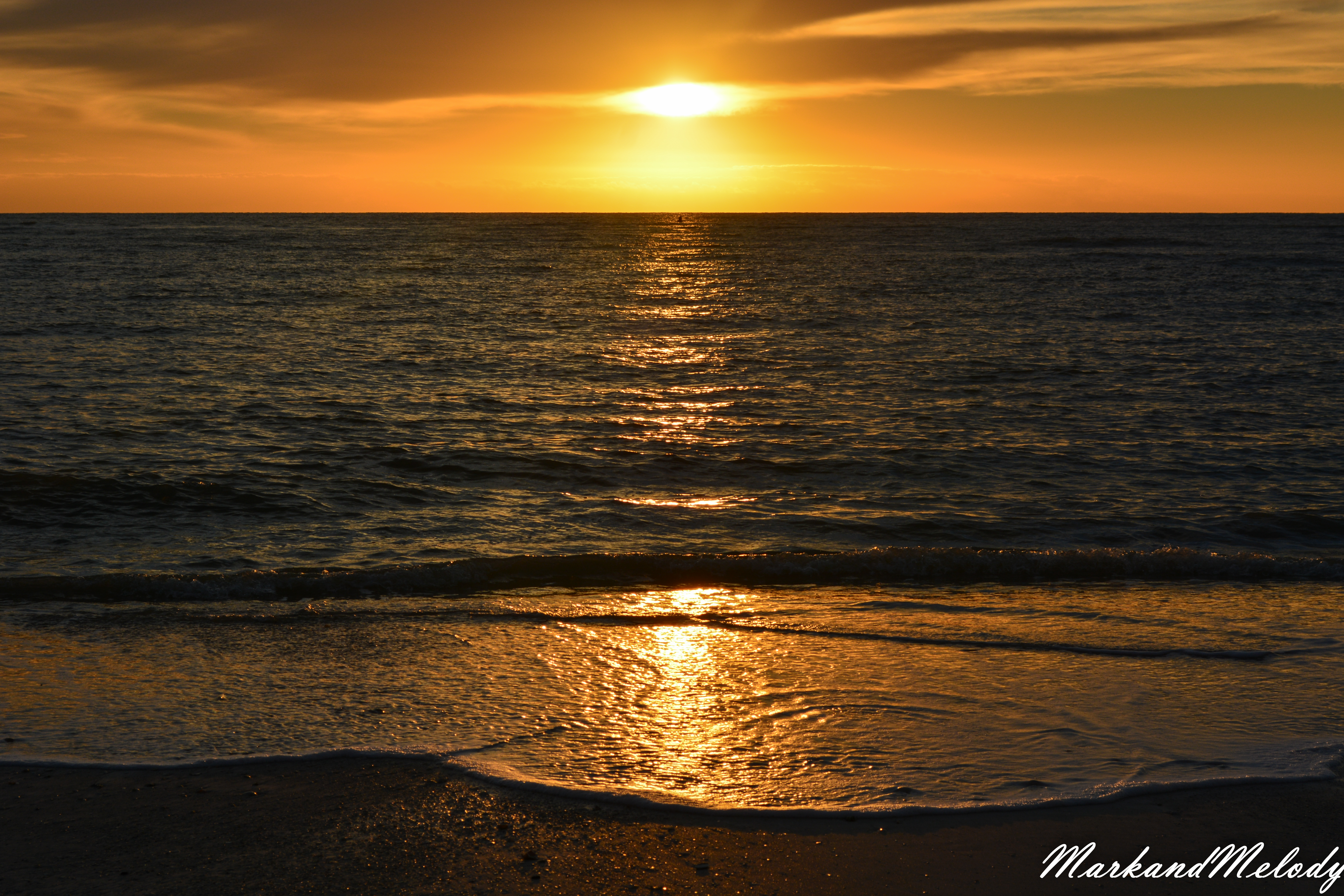
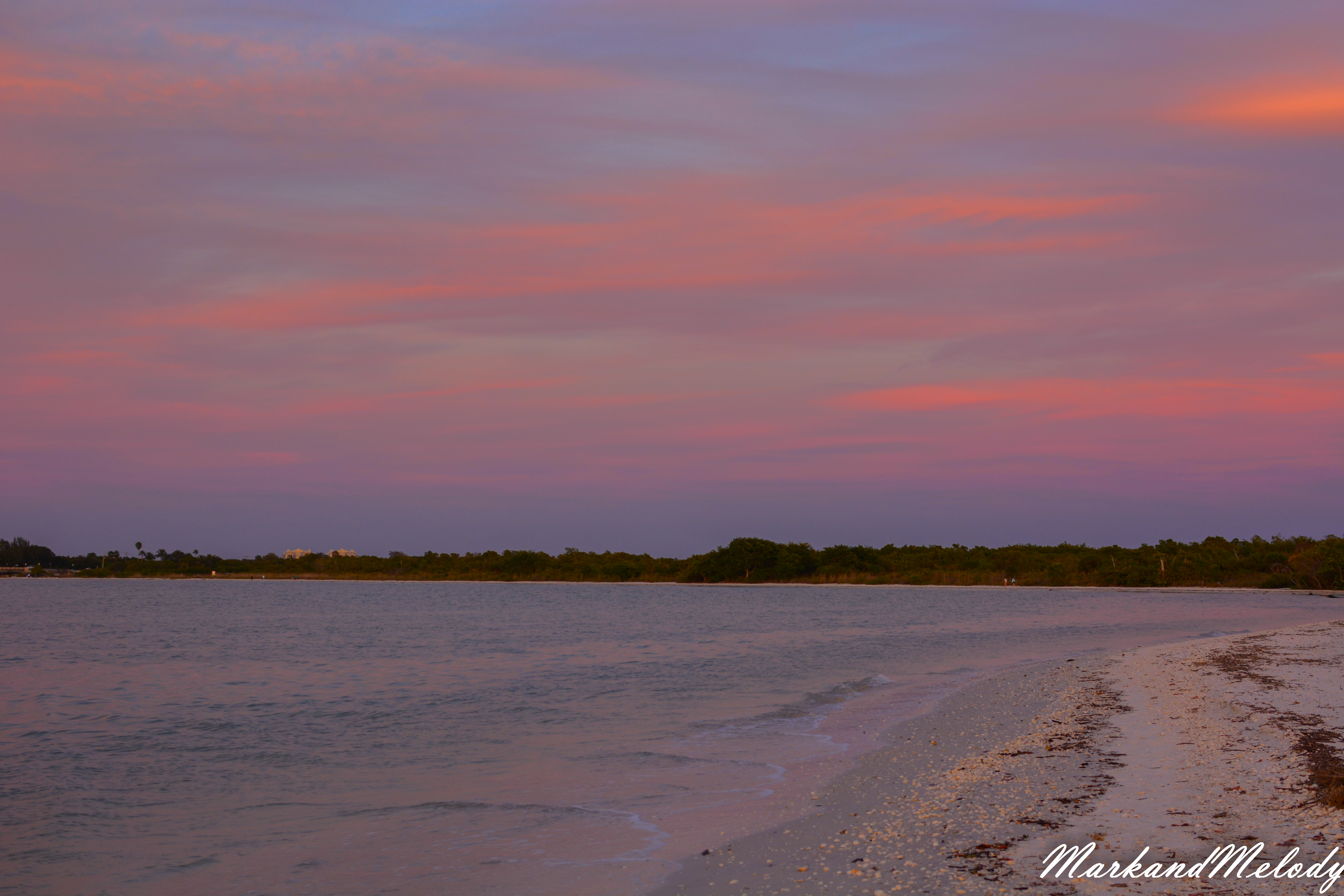
We wandered to the back of the park to have the sun right in front of us. No matter where you are on the Gulf Coast of Florida, you can’t go wrong with the sunset. This is a great place if you are the kind of person that likes long walks on the beach. Here’s our favorite sunset shots: Let us know which view you like more! 
 
To the west, a big orange ball sinks quickly into the Gulf.
To the east, cotton candy clouds  of pink, blue and purple cover the sky.
To the east, cotton candy clouds of pink, blue and purple cover the sky.

Hontoon Island State Park – Minutes from Orlando, Worlds Away

We’re a bit off-beat. We like off the beaten path adventures, off the tourist trail destinations, and off the major highway eats and treats. For New Years weekend, we decided to celebrate by camping in the wilderness, north of Orlando in Hontoon Island State Park.

The name by itself had me wondering an island exists in the middle of the state. Is it a hidden, lesser known version of Alcatraz? Is it the setting for a new series of horror novels? Is this Stephen King’s vacation residence?

Unfortunately (or fortunately), none of the above are true. I was delightfully surprised to find a hidden gem kind of place.

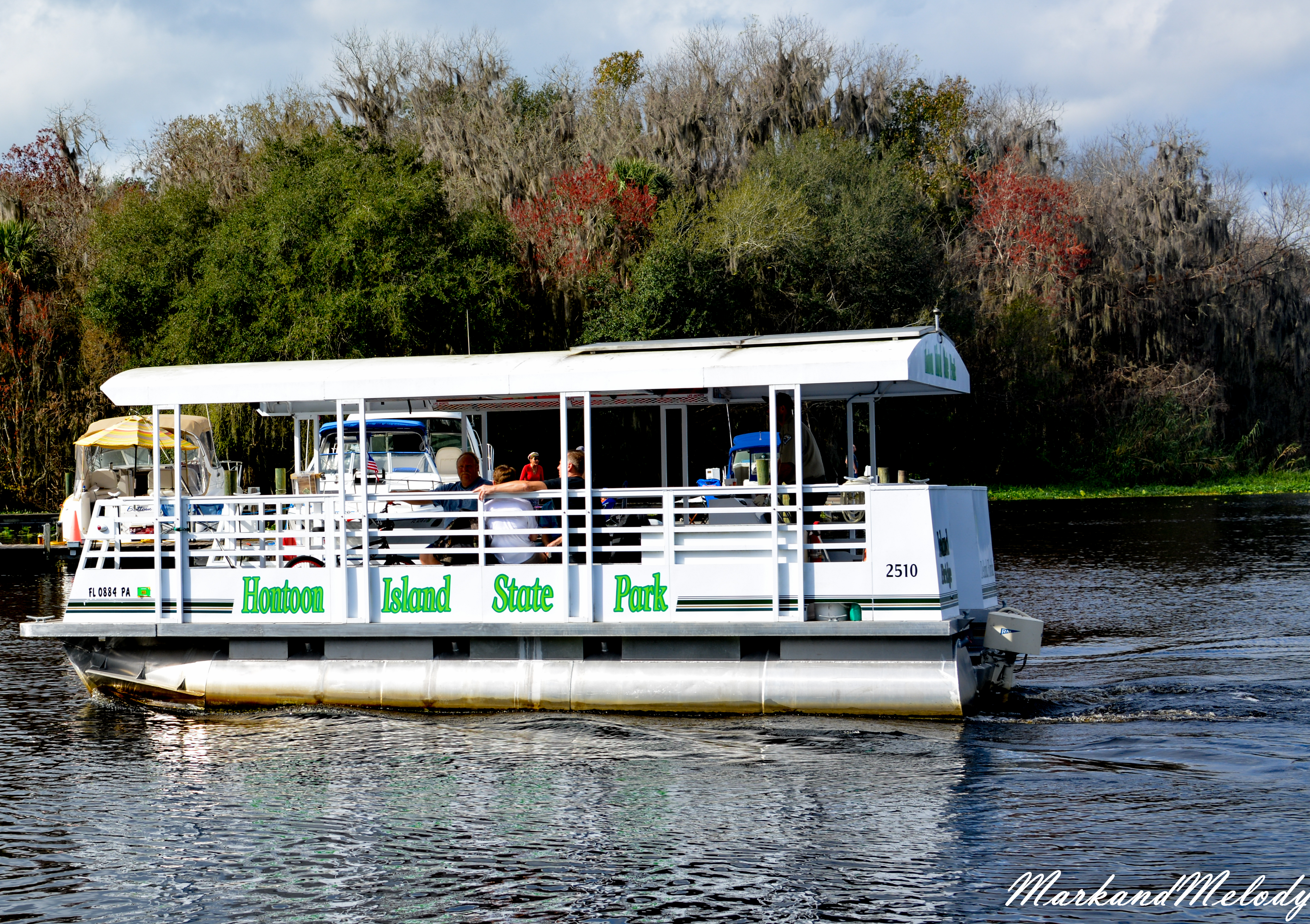
First of all, it’s only an island by about two hundred feet. That’s the span from the “mainland” to the “island”. This lovely little taxi (with room for only six!) schleps people to and from the parking lot (mainland) as needed from 8am to 5pm.

untitled-3

There is no charge to park. Wheelbarrows are provided to unload camping gear into while waiting for this taxi. Hontoon Island staff make it very easy to move things about. A complimentary van ride will take you and your stuff to your campsite. When you are packed up, simply give them a buzz and that same van will pick you and your things up. Bear in mind that even though the website says a 2 tent maximum per campsite it’s not really enforced so long as you don’t cause a ruckus.

Wildlife:

There are bears. Yes. Bears on an island. Deer. Armadillos. Lots of ‘Coons running around. Poisonous snakes. And the most aggressive mosquitoes I have ever experienced. You’ve got to douse yourself in bug spray if you are camping from November to February because the mosquitoes will eat you alive.

Facilities:

There are public (hot) showers and public bathrooms. There’s a coke machine also. One of my friends remarked that, because of this, we weren’t actually camping (though I beg to differ). Everything was well equipped. We had a first time camper with us and she had a great time; moreover, the campgrounds are family friendly. A lot of people bring kids over for a day trip and everyone seems to have a ball.

There’s a small general store with postcards, bug spray, sunscreen, toiletry items and some snacks all at fair prices. This is also where you buy firewood, fire-starters and Duralogs.

Each campsite is outfitted with a firepit and griddle to cook on. There are trash cans by the public washrooms (and that nefarious Coke machine), so at the end of the night (due to the bears and other animals) it’s best to walk the trash to the bear-proof trash bins.

Things to do:

Fish. You can catch an assortment of freshwater fish. If you’re a Florida resident, it’s worth the $20 to get a fishing license which is valid for a year.

DSC_0542-1

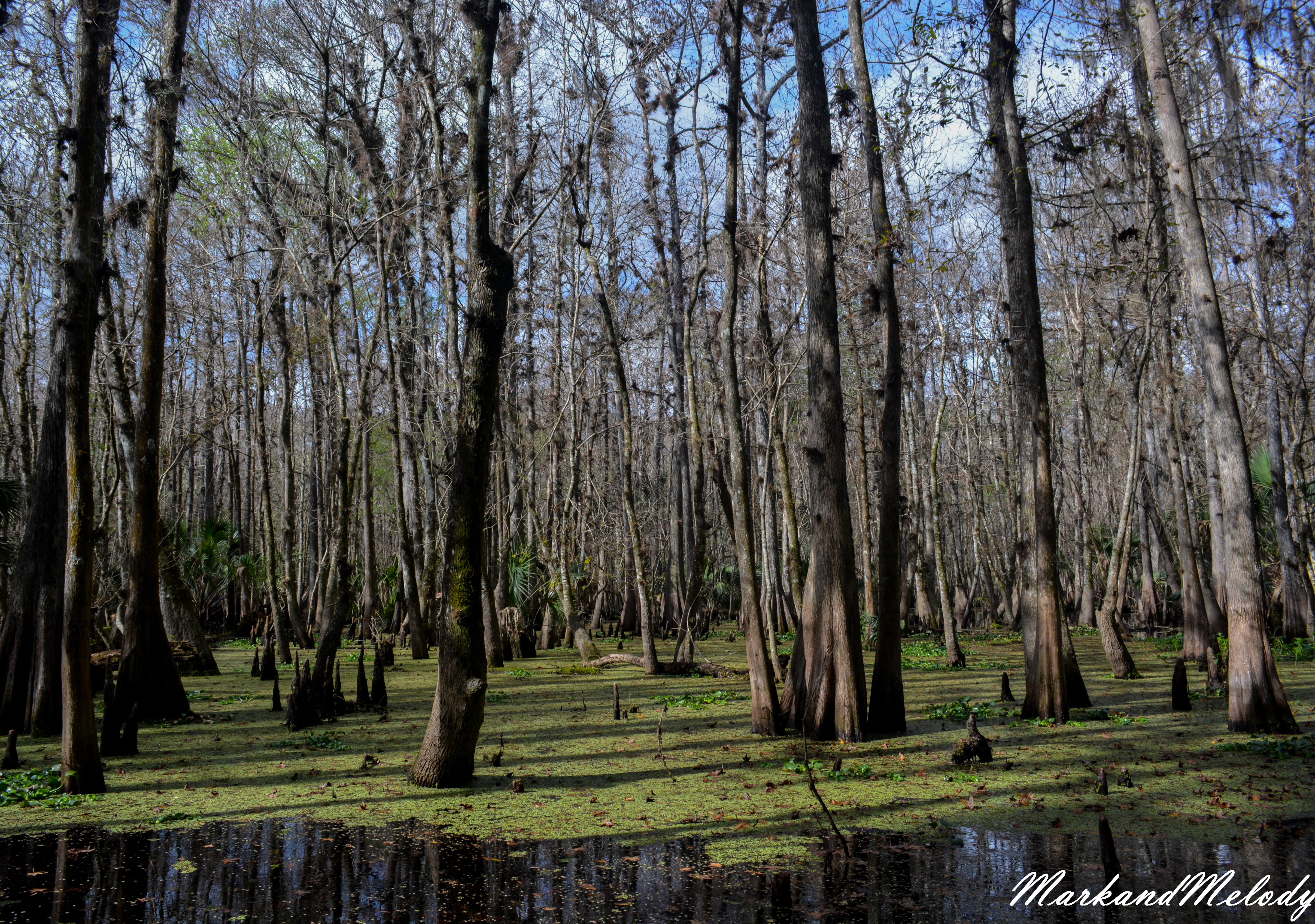
Hiking is another great option, recommended earlier in the day as the air seems to stagnate until you get close to the water. Cypress trees are abundant here, and when you see a group of them together, create a feeling within that this is not that place to be once the sun goes down.

DSC_0703

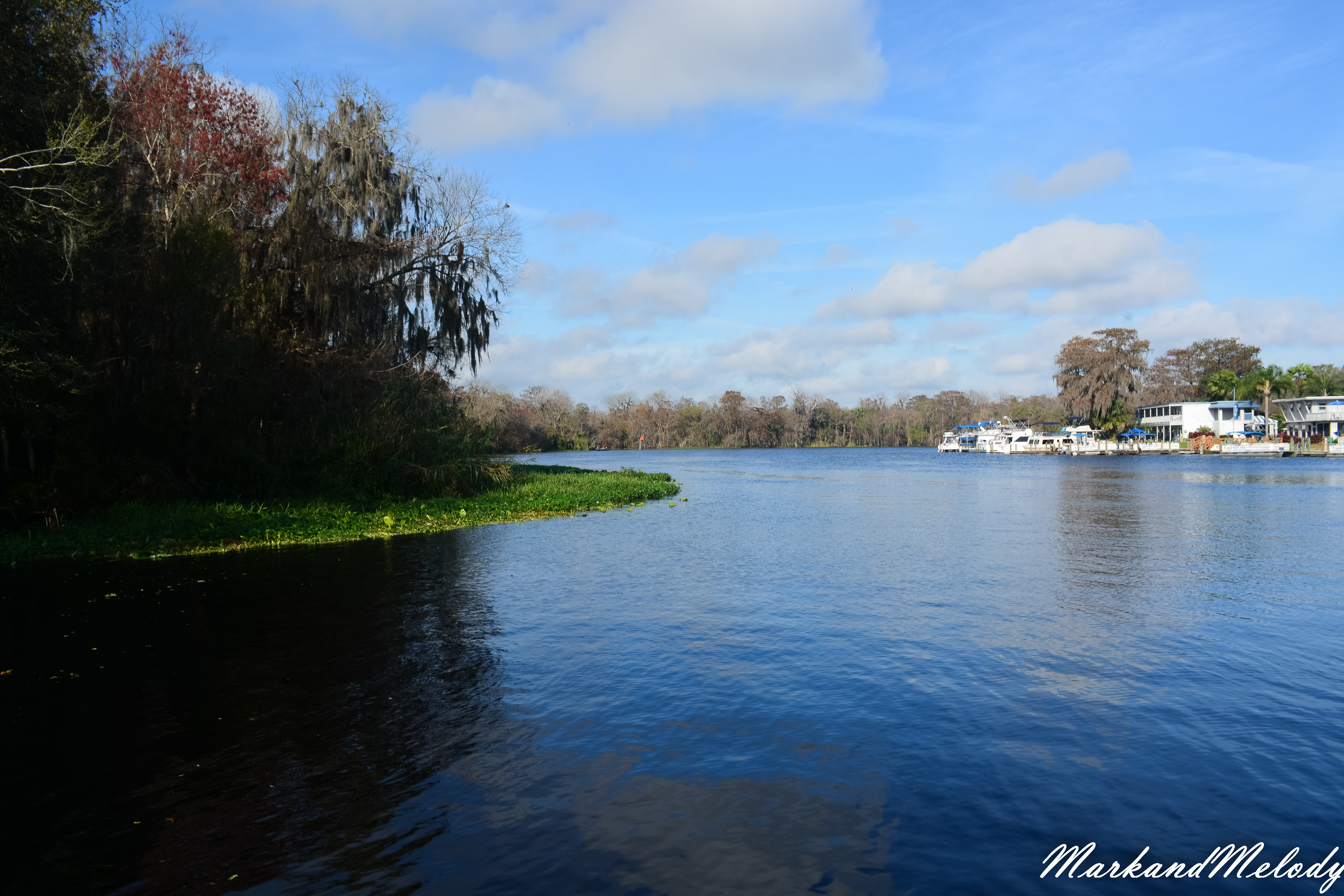
A lot of people canoe and kayak around this area. In fact, Blue Springs is an hour away by kayak (without wind) or two hours with the wind blowing against you. To travel from Hontoon to Blue Springs, you have to traverse the St. John’s River, which has a very fast moving northbound current.  Blue Springs is a bit south of Hontoon, so you will be rowing against the current to Blue Springs, and with the current coming back. Even though it’s a hell of an upper body workout, Blue Springs is worth the trip because of some amazing emerald waters and the chance to see the manatee’s winter home.

16102423877_e8ae734921_o

16287457482_49bde61c6c_o

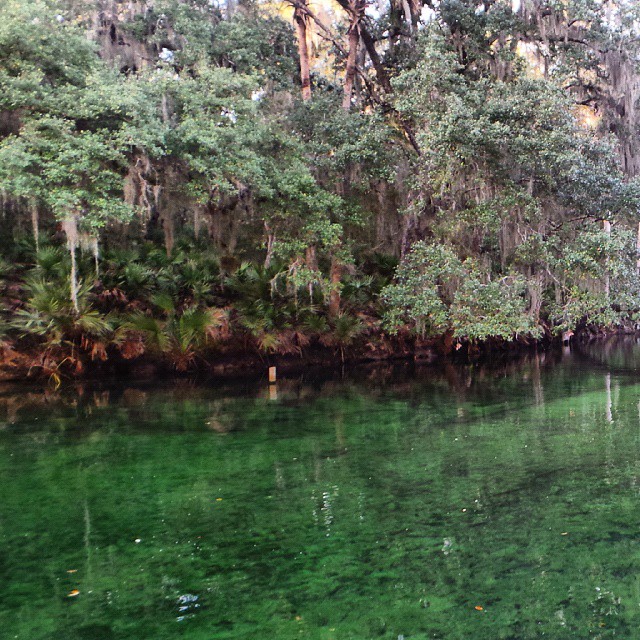
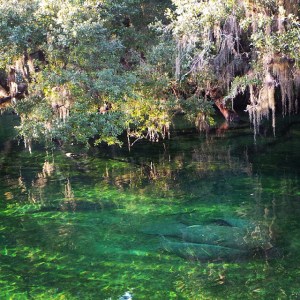
Believe it or not, the water is truly that green. Remarkably, you can see down into the bubbling spring from the boardwalk. (Blue Springs is swimmable when it’s not busy being the manatee winter home from October to April).

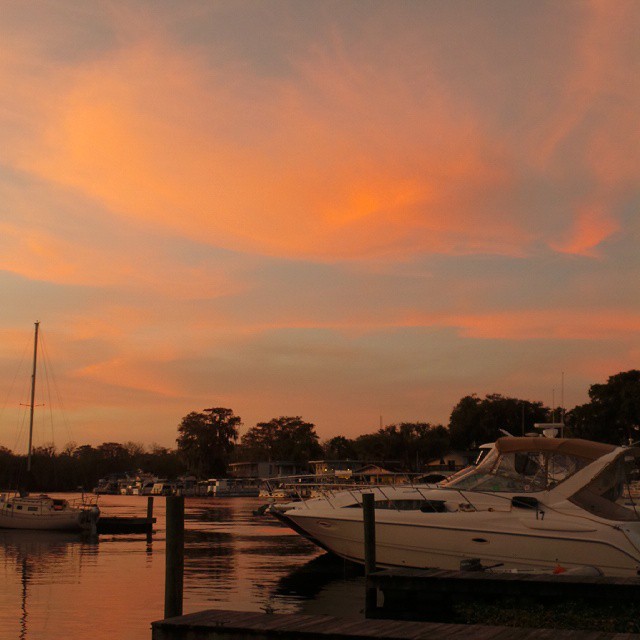
Finally, it wouldn’t be a spectacular Florida destination without a riveting sunset. This was taken right as we arrived back from Blue Spring, without any photo editing or filters.

16262604406_4828908e7a_o

Cheers!

MarkandMelody

Late Night Inspiration Post

When I think about my life, I don’t see a big house. I see myself doing exactly what I’m doing now. Blogging sometime around midnight. Thinking about the last 7 years of international travel. My running shoes are still on. They’re damn comfortable. Where I live, I have a balcony and I have Mark, but instead of overlooking the intracoastal, I am in a studio overlooking Hong Kong, or house-sitting in Tuscany. Right now I’m drinking water, but elsewhere it’ll be tea. In Latin America, espresso. I may have dinner with a different group of people every night. Sometimes I will eat alone. Sometimes I will have to try the homemade wine, and I will likely overindulge. I’ll learn Zulu from little kids and take a timelapse of the Milky Way. I’ll be a staff photographer for Costa Rica Tourism and Mark will find those hidden gems he is so good at finding. This is what I must have. It’s an intense, non-traditional, unpredictable lifestyle. It’s not for everyone. It’s not meant to be understood. But there’s only one person that needs to, and I’m pretty sure he does

A Floridian Discovers the U.S.

I’m a native Floridian. Never lived anywhere else. This may be fueling my need to trade the beach for the mountains. I live a mile away from the beach and haven’t been there to go get a tan or swim in over two years. This probably sounds pretentious.

The Mr. and I have driven through the 48 contiguous states here in America, which has forced me to come to grips with the fact that I live in a sunny, winter-free bubble devoid of the work and pleasantries that come from living somewhere with actual life to it. The following is a series of moments from the road trips where I felt my true Floridian showed its bright, naive colors:

1) Driving through Wyoming in the middle of the night. A road construction sign blinked “Caution: Elk ahead.” I wondered to myself, What does an elk look like? This highway had a speed limit of 70, but I slowed to a crawl of 25. Just as I go to pass the sign, multiple giant deer-looking animals with huge antlers start traipsing across this lonely (read: pitch black) road. I pull over the side and give Mark a sideways glance that means, You’re driving.

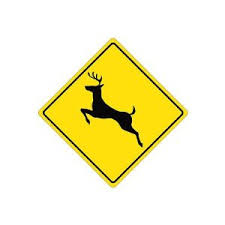
2) Driving through South Dakota on another night mission and I see this sign:

deer

I spend the next two hours convinced that reflectors on the side of the road are beady little eyes belonging to an animal just waiting to jump out in front of the car. (Squirrels do this all the time in Florida; why would deer be any different?)

3) Losing my mind because there was snow in Georgia in February. February is basically summer, no? It was also hot in Georgia. Hotter than Jacksonville. Why in the world was there snow still on the ground?

IMG_1648

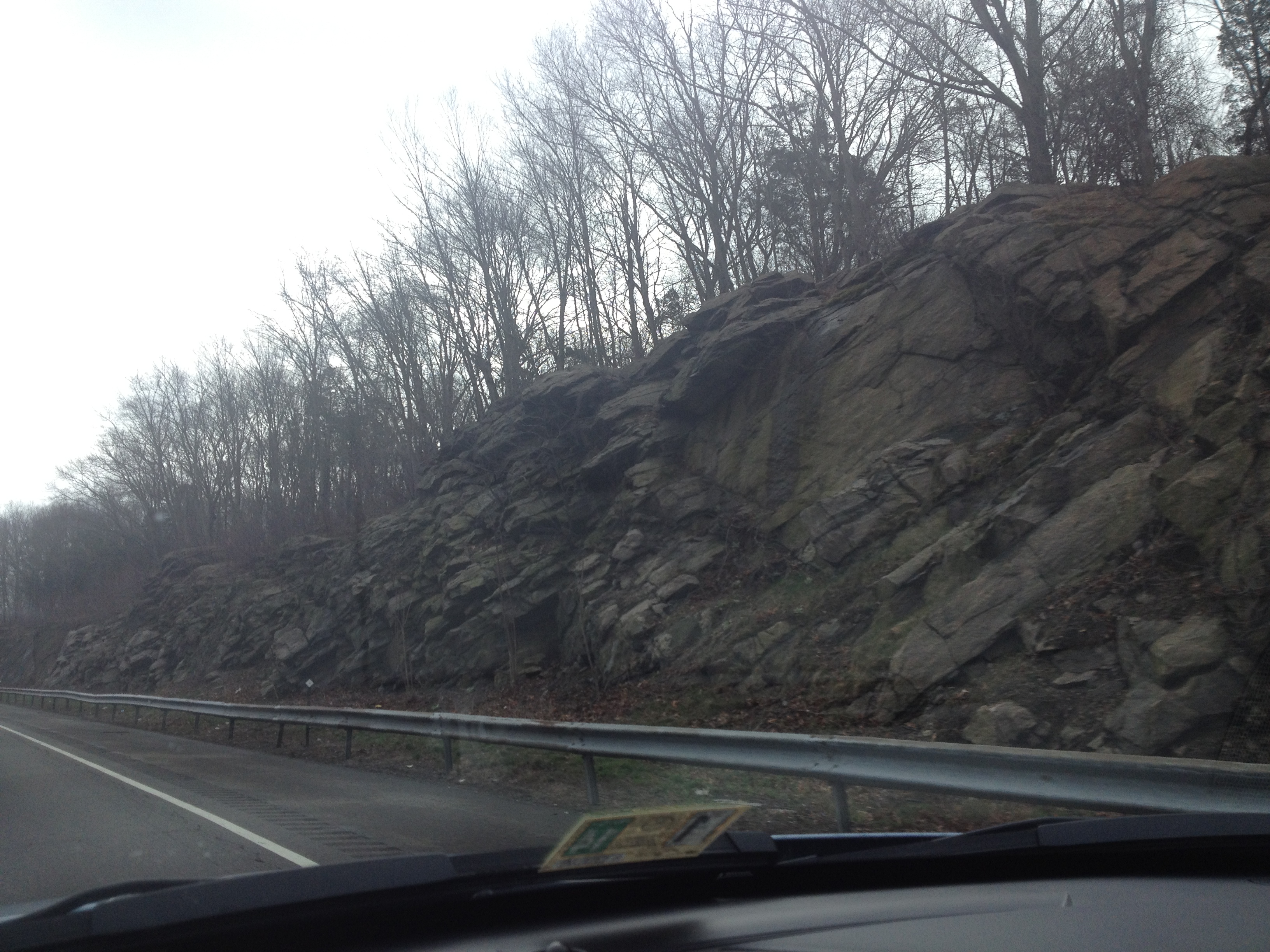
4) Traveling to Connecticut in April, excited to see the fresh green of spring and instead seeing dull, brown trees everywhere. Isn’t April spring? Where is all the foliage?

IMG_2050

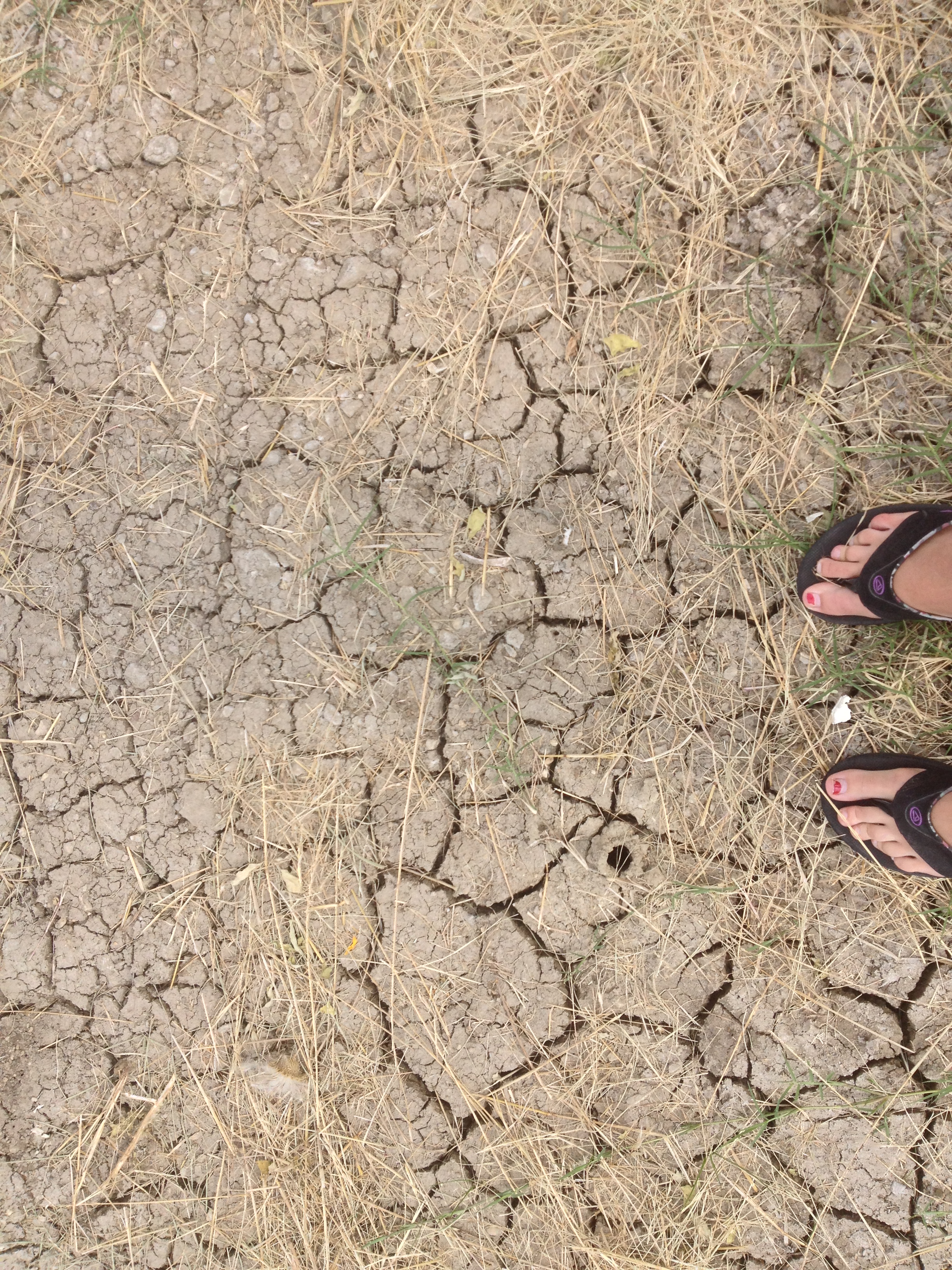
5) Taking a picture of cracked dirt. A novelty. There is no dirt in Florida. It’s limestone. And coral. And some ground up seashells. Also, it rains almost every day in South Florida so why would there be any cracks like this? True Texas style.

2013-07-05 10.03.53

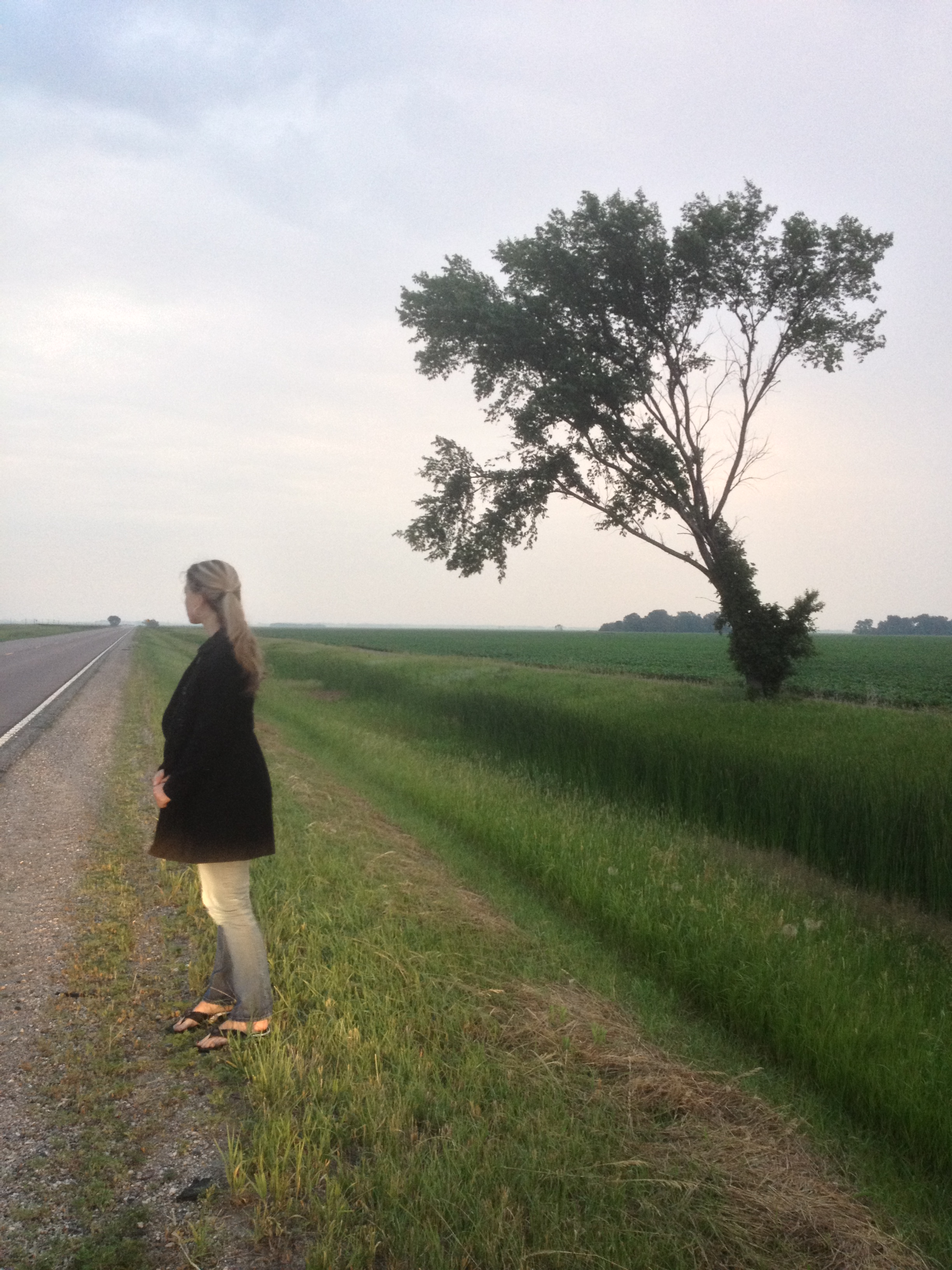
Bonus: In true Florida fashion, apparently my entire body is cold except for my toes. Because wearing close toed shoes isn’t a thing.

2013-07-06 05.47.11

Traveling to Costa Rica? Read This First (Updated for 2015)

Costa Rica is a haven for adventure lovers, thrill seekers, and romantics. When we visited earlier this month, we were burdened again and again by some information that, well meaning, is not entirely true. Here to debunk some of the most popular “advice” of Costa Rica.

MYTH 1: You can’t drive the country alone.

FACT: The country’s roads, though still largely created by boulders and rocks of many sizes, can be driven without hired help and you definitely don’t need a tour bus. A 2WD vehicle is not necessary if you are staying on paved roads.

Please note that the roads to Volcan Arenal (Arenal Volcano), La Fortuna (city, and La Fortuna Waterfall) and the surrounding hotels are largely unpaved. The road from La Fortuna to Monteverde is also unpaved (even if you take the ferry across the lake, much of your travel is going to be on unpaved road.

MYTH 2: It’s unsafe to drive at night because of thieves.

FACT: The danger lies in the complete inability to see axle-breaking potholes in the road at dark. No street lights line the unpaved roads. Seldom you will have a fence between the road and the cliff, but rarely. Please don’t drive once the sun completely sets.

MYTH 3: San Jose is like any other capital, easy to navigate.

FACT: Wrong on so many levels. San Jose is rife with very narrow roads and two-lane roads that abruptly become one-lane. We got lost (several times) even with the Costa Rican GPS.

MYTH 4: My iPhone GPS or Google GPS will navigate me through Costa Rica.

FACT: Yes, the Costa Rican GPS is expensive, but I promise you that you will use it and you will love it. The Costa Rican GPS alerts you of school zones, dangerous bridges (often one-way), and reduced speeds.

Google satellites are extremely dodgy in the mountains and the instructions are delayed by three to five seconds. This doesn’t sound like a lot on paper, but Costa Rica driving instructions involve a lot of “Turn right, then make a sharp left, then turn right again” in a second’s time. The lag from your standard GPS will prove frustrating at the very least.

MYTH 5: Rental car insurance is a waste and I should get only the minimal coverage.

FACT: The majority of domestic car insurance companies limit their liability on rentals abroad. Even if you call your insurance company and are advised otherwise, some information is bound to be omitted. We opted for the insurance that gave us ZERO liability; the agent literally said, “You can bring the car back in pieces, and no charge.” Yes, this almost tripled the cost of the rental car, but having that green light to be as rowdy on the rocky roads as we could be, well, was a treat.

MYTH 6: Sodas are the cheapest place to stop and get food.

FACT: Food prices in Costa Rica have tripled over the past three years. Formal restaurants will still be the bulk of eating expense, but the sodas we went to in the highlands cost us $6 for a heaping helping of chicken and rice.

Bonus:

If you want to drink Costa Rican beer on the cheap, head to the closest supermercado, or market, where you can still pick up beers for less than $1 each.

Why the TSA’s Recommendations are Ridiculous

We’re aware that, per TSA recommendations, we are supposed to arrive at an airport about a year before the plane takes off. Last I was told, it was two hours for a domestic flight and three hours for an international flight. This is nothing more than a nefarious plot to get innocent air travel patrons to pay obscene prices for food, drink, and entertainment pieces. If you arrived at the terminal five minutes before boarding, you would have no time to shop!

My theory regarding this silliness proved true when I received a text from my beloved stating his wallet was missing. He was driving a newly purchased car from New Jersey to Florida, and was driving somewhere around Maryland; he reaches for his wallet to find it’s not there.

Big problem. No plastic money. No driver license. Limited cash. He couldn’t stay in a hotel even if he wanted to, because hotels require ID now… It’s Saturday afternoon. Banks don’t open until Monday, and even then, have you ever tried to prove you’re you at a bank with no ID or any evidence of it?

Cue text to me. I’m headed to tutor another student; he has enough gas to travel another hour and a half.

Solution? I whip the quickest U-turn and head straight for the airport. No going home to pack. No changing clothes. No time to bring a charger. Nothing. Everything in my purse is what I could bring. As I’m waiting feverishly at a light, I’m using the hotels.com app to determine whether to fly out of Fort Lauderdale or Miami. The chosen flight was departing exactly one hour from the time I whipped the U-turn. I had about 25-30 minutes travel time to the airport. I couldn’t book a ticket online or over the phone; I had to take a shot with the Jetblue reservationist at the airport.

I’m pretty sure, in this afternoon, I clocked the fastest speed for a Toyota Corolla. I made it to the airport; the flight departed in 30 minutes, which means the gates closed in 20 minutes. I had to park. No time for economy parking – it’s a ten minute bus ride. Can’t risk it. $36/ a day parking? That will have to do. I park my car. I run to the Jetblue reservation desk. A woman calls me over; completely out of breath I say, “I need to be on the flight that’s leaving in 20 minutes.” She gives me a “Are you $% kidding me?” I say, “Can you do it or not?” She makes the reservation. I’m dancing around like a cat on a hot tin roof.

What is taking SO long?

Finally she hands me a ticket. She asks, “Do you know where you need to go?” Before I can answer, she says, “Make a left here.” And I say, “Then what?” And she says, “Then you run.”

And you know what? I ran like hell. Fort Lauderdale airport is not small. There’s a distance to traverse. My lungs were on fire. But it was the most movie-like scene I have ever been a part of. This was an exceptional moment. I’m running, I’m sweating, my lungs are burning. People are letting me skip them in the security line.

I get to the gate, completely winded, feeling victorious, like I had just crossed a finish line.

All of that running, and for what? Did I miss anything? I didn’t miss anything. The plane was boarding on time, but not one person felt compelled enough to form a line. No Mosaic members had boarded. No priority. No parents and children. Nobody.

With my spare minutes, I had enough time to go buy a $12 pack of Twizzlers and text my beloved that I was at the gate, ready to go.

Everyone boards. It was as if I had been there the entire 2-hour pre-board window of time. The only difference in my experience and everyone else’s is that I got a damn good cardio session from it.

#5: Depart, Connect or Land at 10 New International Airports

The Day Zero Project is a platform where people everywhere create a list of 101 things they would like to do in 1001 days. It’s just shy of three years and can be anything from learning a skill to completing an old goal or something like finishing the Krispy Kreme Challenge (eating a dozen Krispy Kreme donuts and then running a mile!)

One of the things on my list is the title and purpose of this blog: depart, connect or land at 10 international airports that I have never been to. As of today, 10/15/2014, I have been to the following:

Louisville: 07/07/2013
Denver: 09/02/2013
Baltimore: 09/22/2013
Houston Hobby: 01/31/2014
Austin: 01/31/2014
Nashville: 02/02/2014
Seattle: 05/21/2014
Chicago O’Hare: 09/06/2014

There is something very magical that happens at airports; I frequently get odd looks when I mention this to someone as, for the average Joe, an airport brings about a lot of stress: waiting in line after line, sitting in uncomfortable airport seats, paying $12 for a pack of Twizzlers, sick people everywhere, and the jostling and general annoyance when people begin to board the plane and insist on sitting in their designated seat even though it makes absolutely no difference where you sit. This is why I like Southwest’s style of “sit wherever the hell you want. We just have to get this plane in the air.”

I digress. A life of a person reads much like a chapter book. Some chapters are better than others, but an airport is a platform for a serendipitous moment, an exchange, an opportunity to meet someone who resides thousands of miles away from you but is a kindred spirit. It’s a platform where sharing the armrest and asking someone “Are you visiting or going home?” establishes a long-forgotten human connection. It’s almost liberating. The odds of seeing that person again are slim. Something is weighing heavily on your conscience, and here you are in a plane with infinite non-biased third party perspectives. Each story a person tells me is akin to ripping out a page from his or her book and handing it to me.

Here you are. I won’t see you again. Here’s where I am right now. Here’s what I’m thinking. What I’m worried about.

How beautiful that is. You’re now in that person’s book. A guest star. 5 minutes. 5 seconds.

So many things happen before you get to an airport. You pack. There’s feelings of enormous intensity both good and bad. Some people are leaving home; some people are in search of it. Some people are reuniting with their beloved. Some are running away. Some are pursuing an opportunity. Others are leaving one behind. Some are moving away. Some are moving back. Some are ending relationships. Others are trying to fix them.

All beautiful stories. All honest scripts of the human condition. Together in a stew that is an airport.

I wanted to depart, connect or land at 10 international airports for this reason. Seattle passengers were more outdoorsy, down to earth, and more liberal than the people in Miami. People in Austin were fun-loving, food-loving, beer-loving people. Nashville was rife with that famous southern hospitality and amazing sweet tea.

A follow up to this blog, Airport Moments, will be crafted shortly after I post this.

Maybe this makes sense. Maybe it’s poetic. Maybe it’s far out and I’m seeing a disaster area through rose colored glasses. I won’t deny any of these sentiments. But an airport is one of the places that excites me: a raw hive of half-written stories.

MM.

Getting the Best Experience at La Fortuna Waterfall

A trip to the mountains of Costa Rica is incomplete without a visit to La Fortuna Waterfall, and for good reason. It’s a beautiful sight. You can swim in front of it and get an awesome picture of yourself with the waterfall thundering behind you. The hiking trail is well traveled, though it’s much easier to walk down the hundreds of steps than it is to come back up. There’s landings at regular intervals to rest.

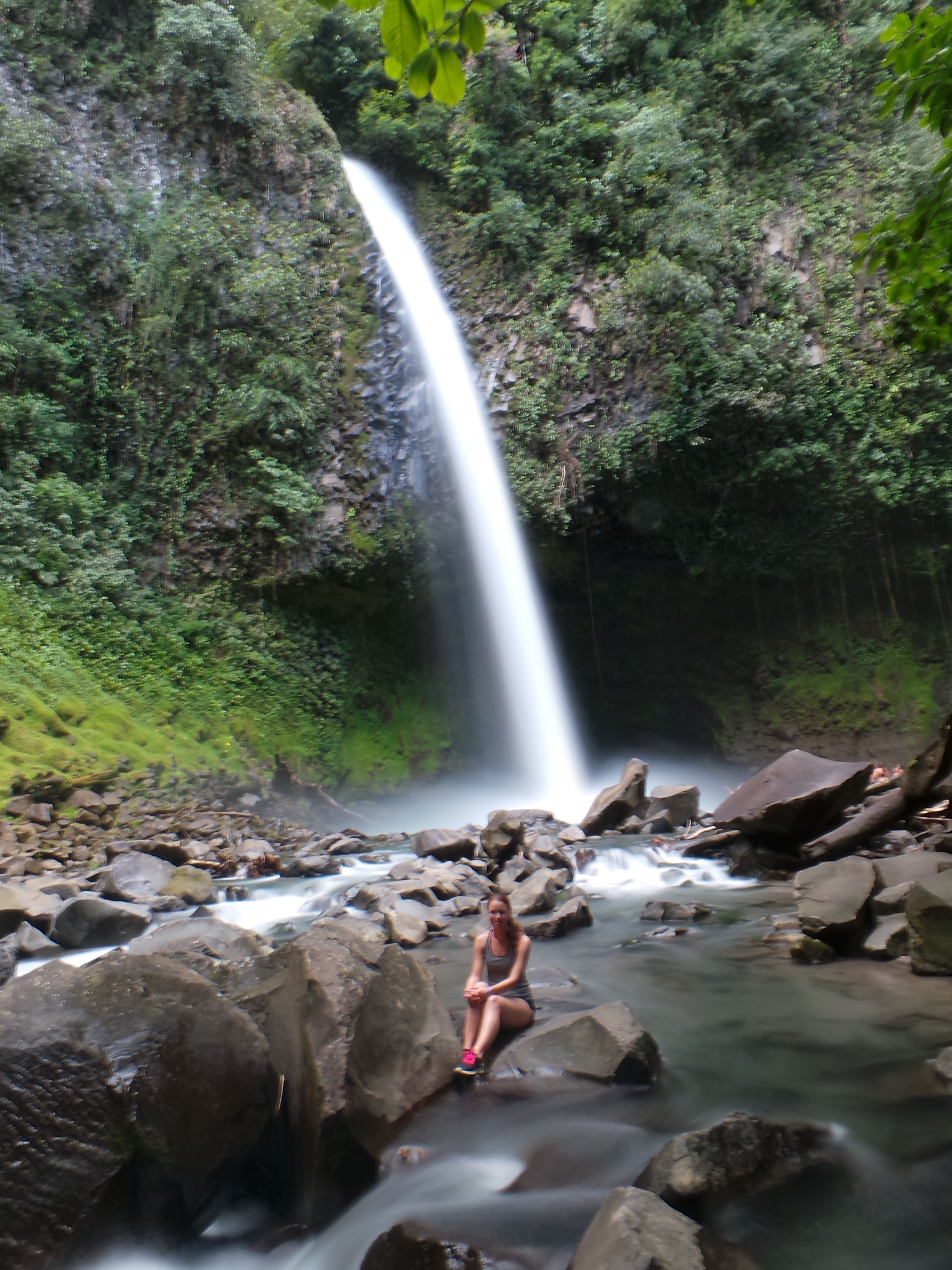
In front of La Fortuna. Difficult to get a shot of just the waterfall.
In front of La Fortuna. The lifeguard watched me closely to make sure I did not climb over too many rocks.

However, in the last few years tourism to Costa Rica has exploded. The well traveled tourist trail is getting even more, well, traveled. What once was a waterfall that one could spend uninterrupted hours at is now a lunch stop for tour companies operating in the Arenal region. This makes alone time with La Fortuna rather difficult. We arrived at 11am to find a few couples swimming at the base of the falls. In the next half hour, Desafio Tour Company and their group of 30-40 people arrived and tourists sprawled out over the rocks in front of the waterfall to eat lunch. Unless a person is sitting perfectly still, the long exposure shot of the waterfall (like the type we were trying to get, above) becomes completely distorted.

There’s a lifeguard of sorts at the entrance to the waterfall now. You used to be able to swim behind the waterfall (a sublime experience) but this lifeguard does not permit that. In fact, if you get too close to the waterfall you get a whistle blown and a hand waving you back to shore. It takes the “unadulterated nature factor” away.

Regardless, the waterfall is still worth a quick visit. Here’s how to get your best experience:

1) Make sure you are down to the falls before 10am. In order to do this, you’ll have to get your ticket to the waterfall by 9am (tickets are still $10 USD).

2) Carry a small backpack with drinking water, a light snack, flip flops/ water shoes, and a towel. 

3) Wear your bathing suit. There are no stalls to change in. 

4) Leave before the lunch crowd, which trickles in about 11:30am. (It pains me to say there’s a lunch crowd at a waterfall, but there is). 

#MarkandMelody